What actually makes Greek yogurt Greek
The difference between Greek and regular yogurt is not the cultures, not the temperature, and not the machine. It is the removal of whey — the liquid component of yogurt — through straining.
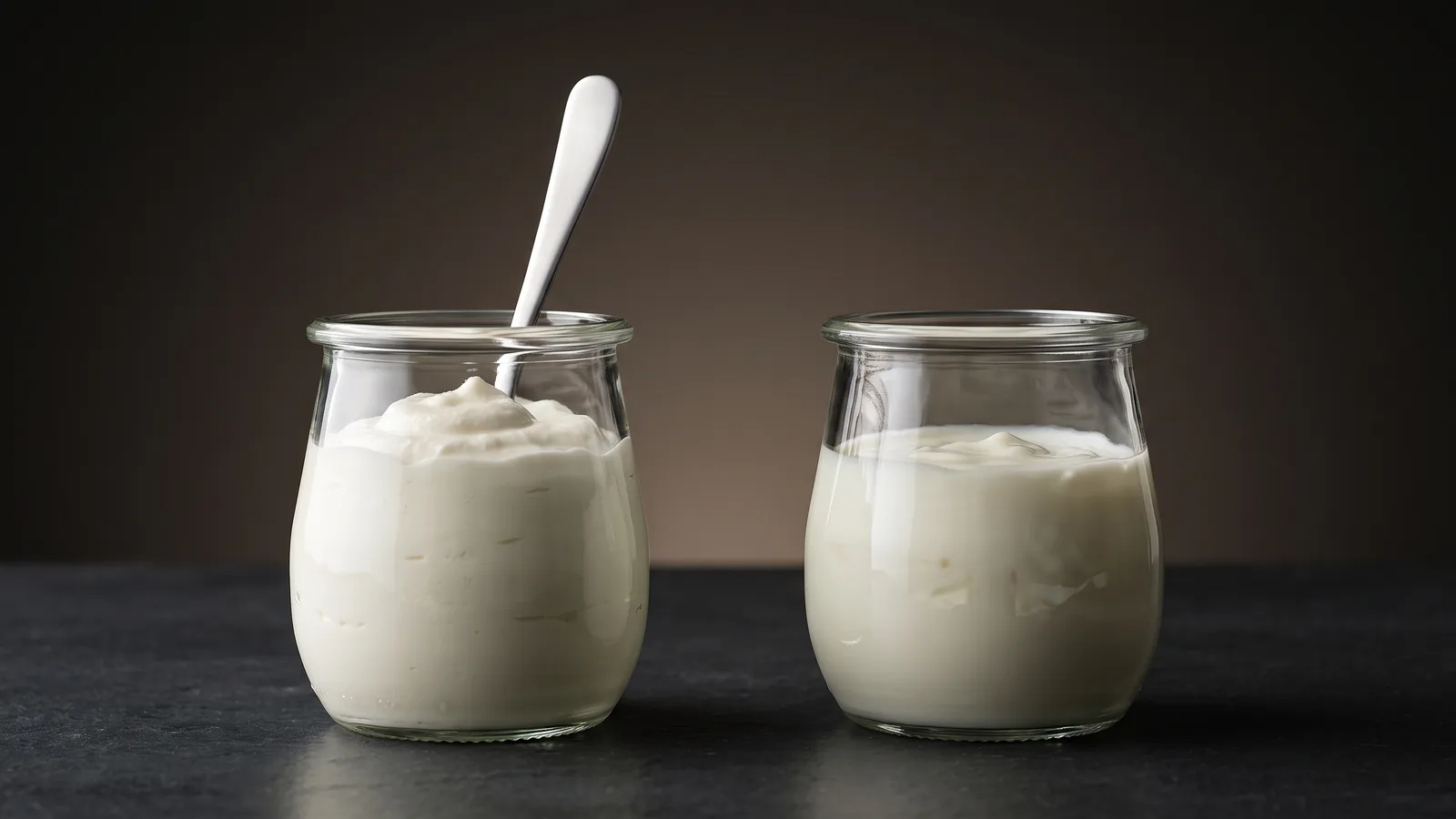
Regular yogurt is incubated milk that has set into a gel. It contains the full water content of the milk, which produces a thinner, more liquid consistency. Greek yogurt is the same product after much of the whey has been strained out, concentrating the solids — primarily protein and fat — into a thicker, creamier result.
The implications:
Nutritionally, Greek yogurt has more protein per serving than regular yogurt (the protein concentrates as liquid is removed), less lactose (much of it leaves with the whey), and the same or slightly higher fat content since fat remains in the solids.
Texturally, Greek yogurt is firmer — it holds its shape when spooned, does not pool liquid at the bottom of the container, and produces a creamier mouthfeel.
In volume terms, making Greek yogurt produces less yogurt from the same quantity of milk. Straining a quart of regular yogurt produces roughly 2 cups of Greek yogurt and 1 to 1.5 cups of whey. Buyers who switch from buying to making Greek yogurt are sometimes surprised by this ratio.
How the yogurt maker fits in
The machine’s job ends at incubation. After the incubation period completes:
- Remove jars or the container from the machine
- If using jars: pour the contents into a strainer lined with cheesecloth or a fine-mesh strainer over a bowl. If using a single container: pour directly.
- Cover loosely and refrigerate for 2 to 8 hours depending on desired thickness
- Transfer strained yogurt to storage containers; reserve or discard whey
This process works regardless of which yogurt maker produced the base. The machine is incubating regular yogurt; the straining step is done by the user.
What “Greek yogurt setting” on some machines actually means
Some yogurt makers advertise a “Greek yogurt function” or “Greek yogurt setting.” This is marketing language that usually describes one of two things:
A longer incubation timer. A longer incubation (9 to 12 hours instead of 6 to 8) produces a slightly thicker, tangier base that strains more efficiently and produces thicker Greek yogurt with less straining time. This is a useful feature, but it is just a timer preset — not a mechanically distinct function.
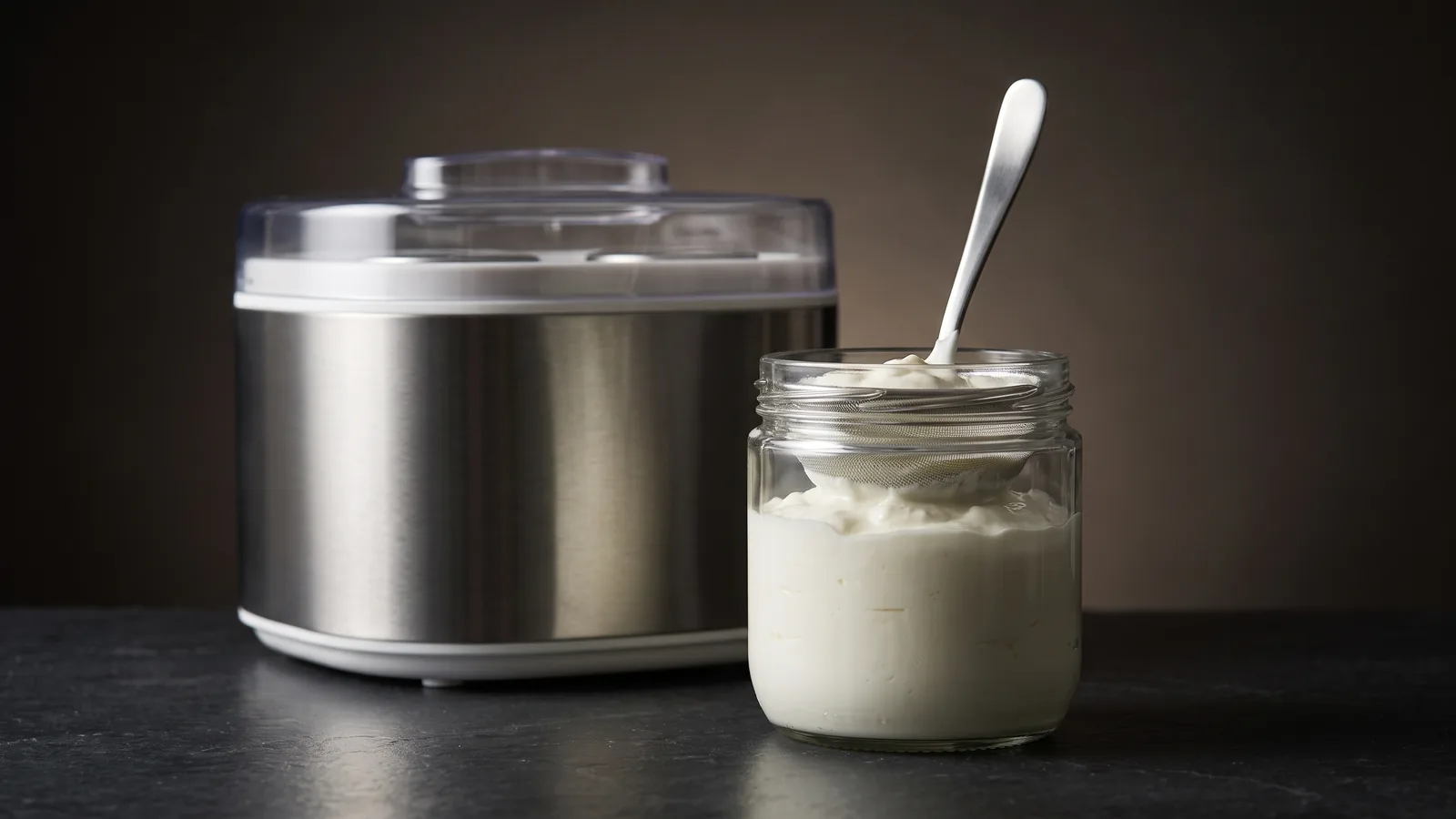
A built-in strainer insert. Some machines include a mesh basket or strainer insert that fits inside the container or over the jar. This makes the straining step more convenient by eliminating the need for separate cheesecloth and a bowl. The straining mechanism is identical to doing it manually; the accessory saves the user from sourcing their own strainer.
Neither constitutes a distinct machine capability. Any yogurt maker that produces a reliably set base yogurt can produce Greek yogurt.
What produces a better base for straining
The quality of Greek yogurt is largely determined by the quality of the regular yogurt base. Two factors affect the base significantly:
Incubation temperature. A machine that holds a stable 110°F produces a smoothly set gel that strains cleanly. A machine that runs too hot produces a slightly grainy, over-fermented base that strains to a similarly grainy Greek yogurt. Temperature consistency in the machine directly translates to texture consistency in the finished product.
Milk fat content. Whole milk produces a richer, creamier Greek yogurt after straining. 2% milk produces a somewhat thinner result. Skim milk produces a tangier, protein-dense but lower-fat result. The fat content of the starting milk determines the fat content of the finished Greek yogurt — straining does not add or remove fat, it concentrates what is already there.
A secondary factor worth noting: heating the milk to 180°F before cooling and adding the starter denatures milk proteins in a way that produces a thicker, more stable base. This step is optional — the machine can incubate without it — but buyers who want a particularly thick Greek yogurt without extended straining often include the boil step.
The straining equipment
No special equipment is required beyond what most kitchens already have. Options in descending order of convenience:
Cheesecloth over a colander over a bowl. The traditional method. Works well; requires rinsing the cheesecloth before reuse or using disposable cloth. Most supermarkets carry it.
Fine-mesh strainer over a bowl. A standard kitchen strainer with small enough holes to catch yogurt solids. Faster setup than cheesecloth but produces a slightly less thorough strain — some solids pass through the mesh. Works well for most applications.
Dedicated Greek yogurt strainer. A device specifically designed for this: a container with a built-in strainer basket, a lid, and enough clearance to hold the whey without the strained yogurt sitting in the liquid. Several brands sell these for $10 to $20. Convenient for buyers who make Greek yogurt frequently; not necessary for occasional batches.
Strainer insert included with the machine. Some yogurt makers include this as an accessory. If the machine under consideration includes one, it adds genuine convenience. It is not a reason to choose one machine over another if everything else is equal.
Thickness as a variable
Greek yogurt is not binary — the thickness is controlled by straining duration:
| Straining time | Result |
|---|---|
| 1 hour | Slightly thicker than regular yogurt; creamy but still pourable |
| 2–3 hours | Standard Greek yogurt thickness; holds shape when spooned |
| 4–6 hours | Very thick; close to full-fat commercial Greek yogurt |
| 8+ hours (overnight) | Extremely thick; labneh-like, similar to cream cheese in consistency |
The whey removed at each stage is usable in recipes — baking, smoothies, soups — so there is no waste in straining further than needed.
What to do with the whey
Whey is the overlooked byproduct of Greek yogurt production. A quart of regular yogurt produces 1 to 1.5 cups of whey, which is mildly acidic, slightly yellowish, and contains protein, lactose, and B vitamins.
Practical uses:
- Replace water or milk in bread, pancake, or waffle recipes for added protein and a slight tang
- Add to smoothies in place of water
- Use as the liquid in oatmeal
- Soak dried beans (the acidity helps break down tough starches)
- Use in salad dressings in place of buttermilk
Whey keeps refrigerated for up to a week. Most buyers who start making Greek yogurt regularly find a use for it within a few batches.
Next: How to clean a yogurt maker · See the top yogurt makers