The decision framework
Most drip coffee maker dissatisfaction traces to one of three mismatches: the machine brews too cool for good extraction, the carafe burns the coffee the buyer returns to an hour later, or the capacity doesn’t match the household size. Addressing these in order covers 80% of what determines satisfaction.
1. Brew temperature: the most important specification nobody reads
The Specialty Coffee Association (SCA) standard for drip coffee brew temperature is 195–205°F (90–96°C). Water in this range fully extracts the sugars, acids, and oils that make coffee taste balanced and complete. Water below 195°F under-extracts — producing a flat, weak, or slightly sour cup. Water above 205°F risks over-extraction — producing a harsh, bitter cup.
Where buyer complaints cluster: the single most common drip coffee complaint in verified buyer reviews is coffee that tastes weak or thin even at a medium-to-dark roast, a strong grind, and an appropriate dose. This complaint disproportionately appears in machines that brew at 165–185°F — a range that is widely documented in third-party testing of sub-$50 drip machines.
What to look for: the machine’s specifications should explicitly state brew temperature, or the machine should carry SCA Certified Home Brewer status. SCA certification requires demonstrating 195–205°F water temperature during the brew cycle in third-party testing — it is not a marketing claim but a tested result. Machines without either a stated brew temperature or SCA certification may or may not brew at the correct temperature; there is no reliable way to predict from price alone.
The practical test: if you own a drip machine and suspect temperature is the issue, a thermometer placed under the showerhead during brewing will tell you. A machine consistently reaching 185°F or below is the source of the flavor problem, not the beans or grind.
2. Carafe type: glass vs thermal
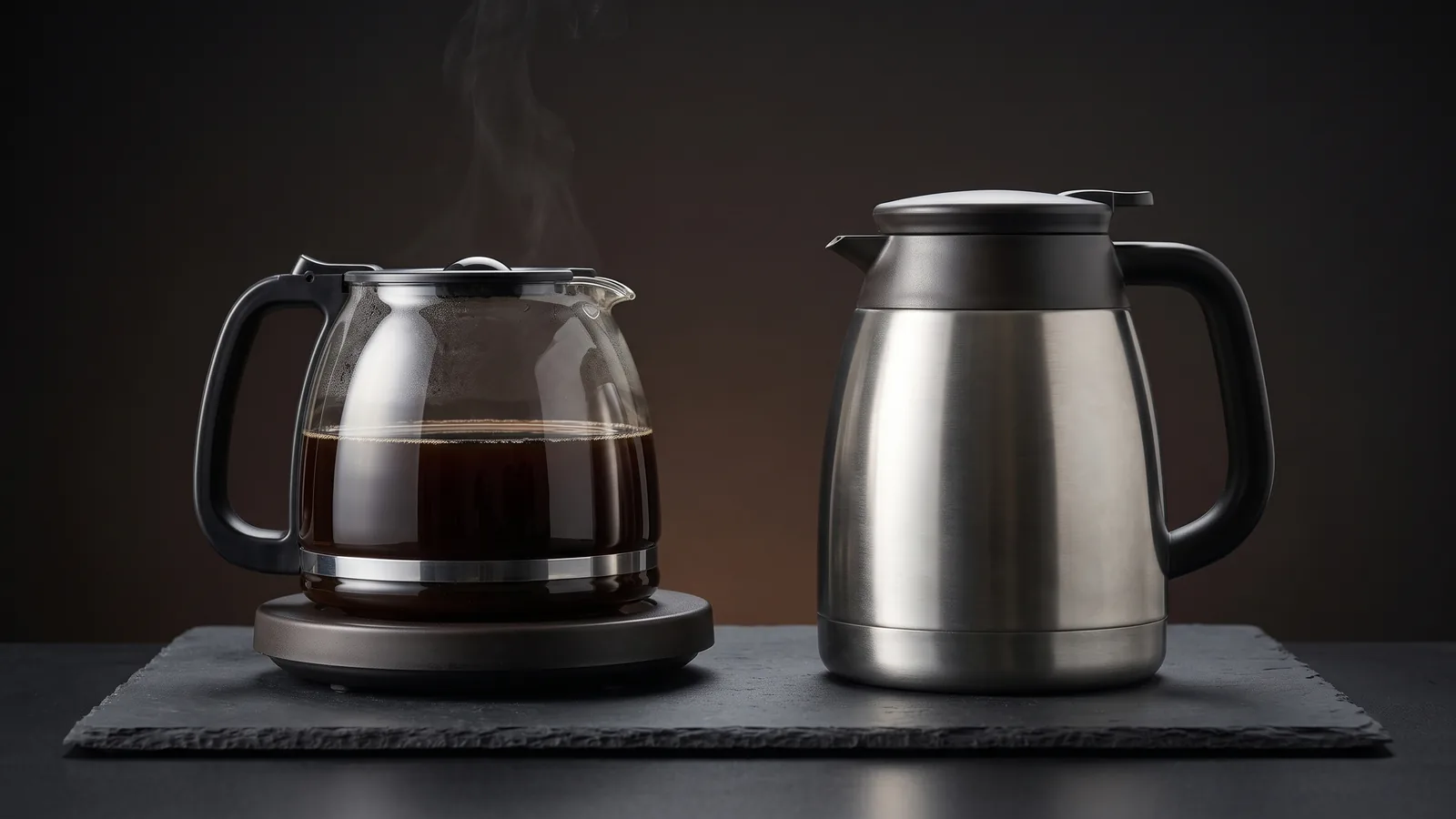
Glass carafe with warming plate
Glass carafes are clear, easy to see the fill level, and inexpensive to replace. The warming plate underneath keeps coffee at approximately 140–175°F indefinitely.
The problem: warming plates do not control temperature — they apply constant heat. Over 20–30 minutes, this burns the bottom layer of coffee. The burned layer mixes into the carafe, degrading the flavor of every subsequent cup. Buyer reviews are consistent: the first cup from a glass carafe machine tastes fine; the cup poured 45 minutes later tastes stale and bitter. This is not a problem with the machine’s brewing — it is a problem with the holding method.
Glass carafe is appropriate for: households that brew and drink all the coffee within 20–30 minutes of brewing. If the entire pot is consumed by the time the last person finishes their first cup, the warming plate has not had time to degrade the coffee.
Thermal carafe
Thermal carafes are insulated containers — typically double-wall stainless steel — that retain heat through insulation rather than external heat. No warming plate involved.
Retention: a pre-heated thermal carafe maintains 140–165°F for 2–4 hours depending on ambient temperature and how often it is opened. Pre-heating (rinsing the carafe with hot water before brewing) adds 10–15°F of initial retention.
The advantage: coffee does not burn. The flavor at hour two is the flavor it was at minute zero — slightly cooler, but not degraded.
The drawback: thermal carafes require more effort to clean, are opaque (no fill-level window), and add $15–$50 to the machine’s price versus an equivalent glass-carafe model. Some thermal carafe machines also brew slightly slower because the carafe must be pre-heated or the machine compensates by brewing hotter.
Decision rule
| Drinking pattern | Carafe recommendation |
|---|---|
| Drink all coffee within 20 minutes | Either works |
| Brew and return to it over 1–2 hours | Thermal carafe |
| Make one batch and keep all day | Thermal carafe |
| Multiple smaller batches throughout the day | Glass (re-brewing is faster than maintaining) |
3. Capacity: buyer regret runs in one direction
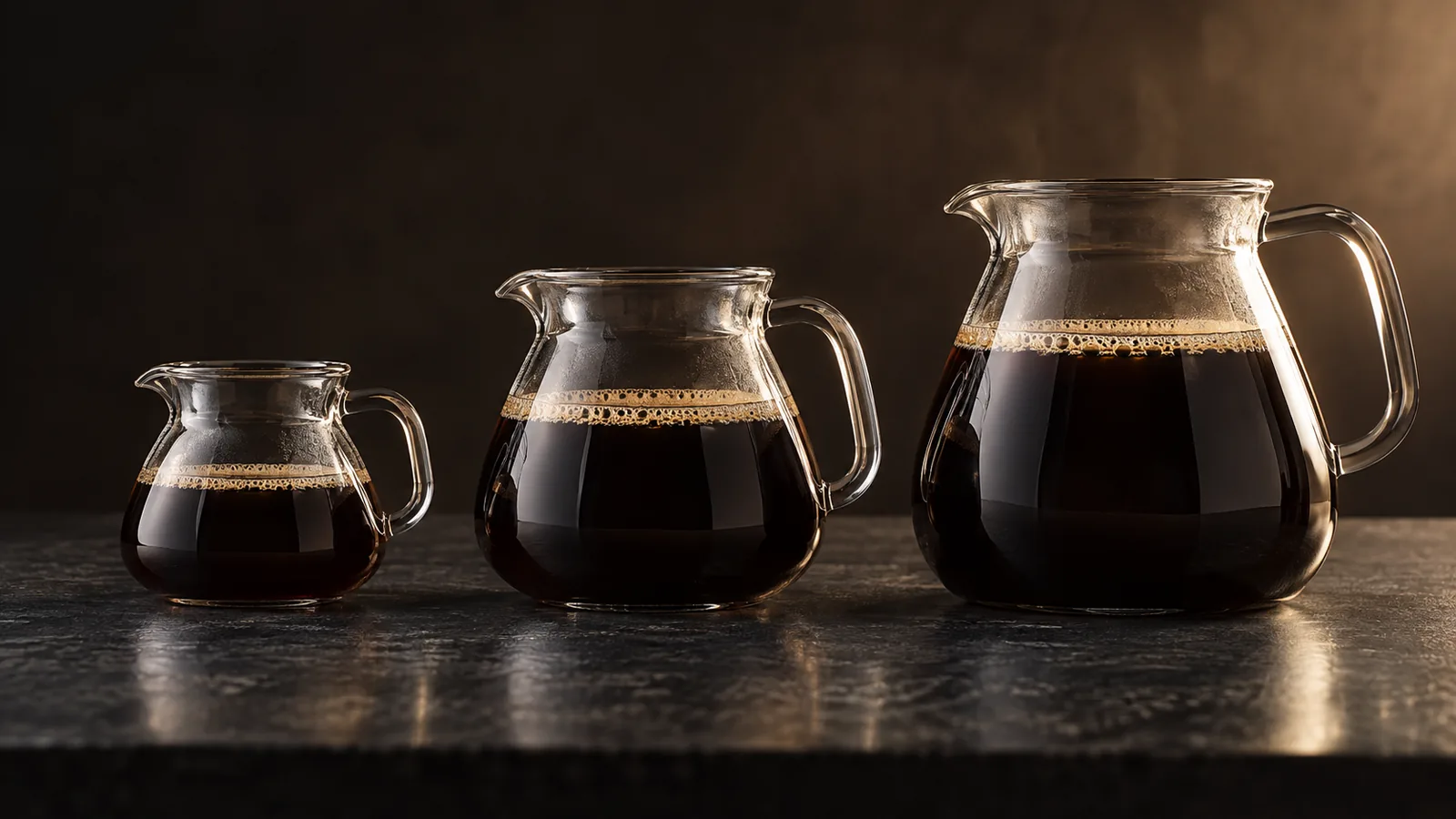
Drip coffee makers are sold in roughly three capacity tiers:
| Tier | Carafe size | Cups produced | Best for |
|---|---|---|---|
| Compact / personal | 4–5 cup | 2–3 people or 1 large batch | Single buyers, couples |
| Mid-size | 8–10 cup | 4–6 people | Small households, light office use |
| Full-size | 12–14 cup | 6–8 people | Families, regular entertaining |
Where regret concentrates: buyers who purchase 12-cup machines and live alone or in pairs overwhelmingly report using it at 4–6 cup capacity — running it under-full every day — and wishing they had bought something smaller. A 12-cup machine brewed at 4-cup capacity still takes the same counter space, costs the same electricity, and takes the same time to clean. Very few buyers report regretting purchasing too small; most who report regret purchased too large.
The coffee concentration issue: drip coffee makers are calibrated for a specific ratio of water to grounds at their rated capacity. Brewing 4 cups in a 12-cup machine often produces weaker coffee because the showerhead distributes water across grounds sized for 12 cups. A 4-cup machine brewing 4 cups keeps the ratio correct and often produces a better result.
4. Features that make a measurable difference
Bloom / pre-infusion
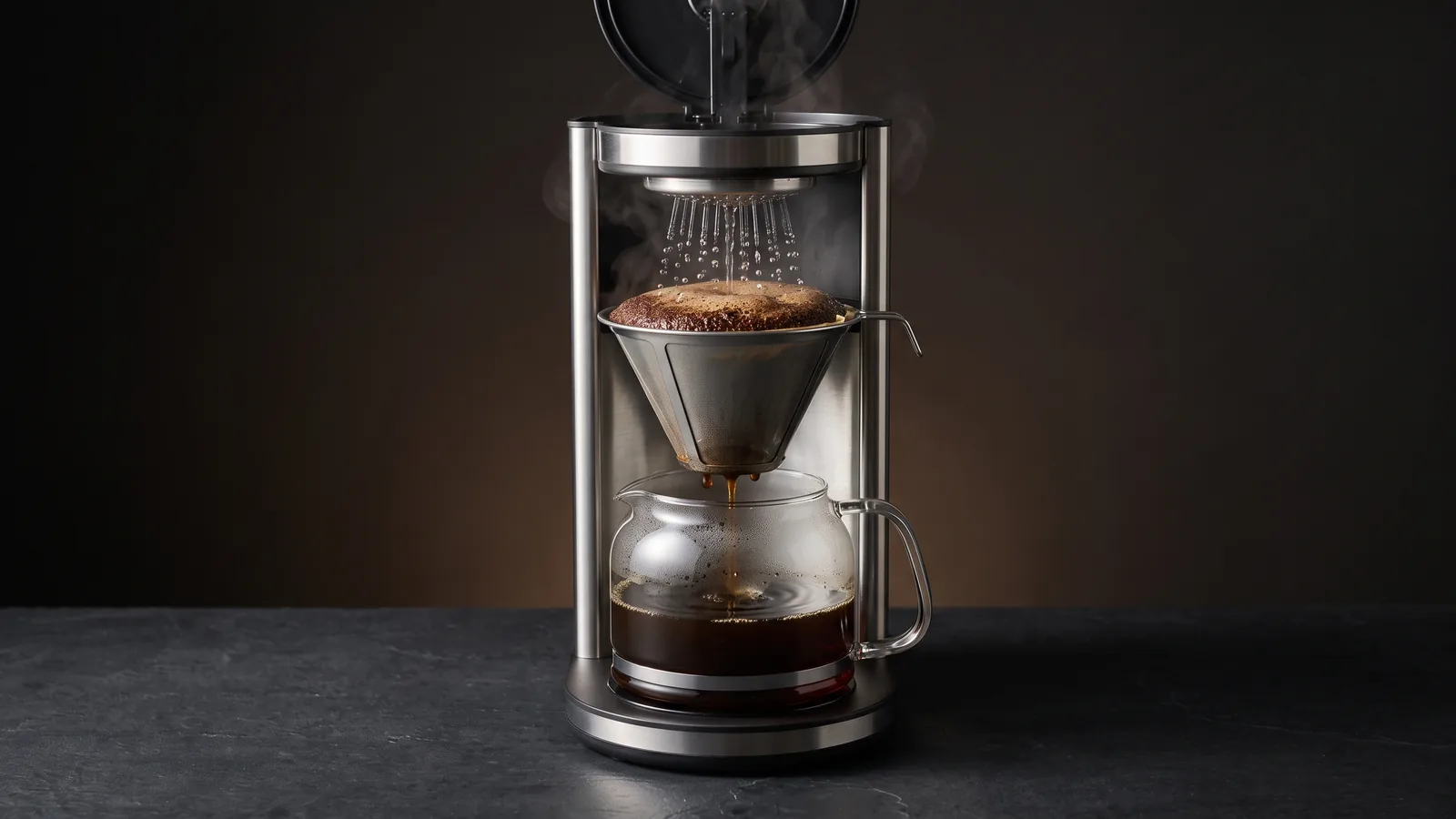
A bloom cycle briefly wets the grounds with a small amount of water before the full brew begins. CO2 from freshly roasted coffee degasses during the bloom — preventing gas from creating channels in the grounds that lead to uneven extraction. Buyer reviews for machines with bloom cycles consistently report fewer complaints about weak or uneven-tasting coffee across the same beans.
When it matters most: fresher beans (roasted within 2–4 weeks), lighter roasts, and pour-over-style grind sizes. Dark, oily, or stale beans produce less CO2 and benefit less from bloom.
Showerhead design
The showerhead is the part that distributes hot water across the grounds. A wide, even distribution saturates all grounds equally. A narrow, concentrated stream over-extracts the center and under-extracts the edges.
What to look for: product listings and reviews that mention a “wide showerhead,” “spiral showerhead,” or “even water distribution.” SCA-certified machines are tested for extraction evenness as part of certification, which implicitly requires a functional showerhead design.
Programmability (24-hour delay brew)
The delay-brew function allows scheduling a brew to start automatically — commonly used to have coffee ready when waking up.
Buyer reality: buyers who report using delay brew consistently find it valuable. Buyers who buy a machine for this feature and never use it is also a common report — the feature requires grinding and loading the night before, which many buyers find inconvenient in practice. Programmability adds roughly $15–$30 to machine cost; it is worth paying for only if you have the habit of preparing the machine the night before.
Warming plate temperature control
Some machines offer an adjustable warming plate temperature (low/medium/high). This marginally extends the window before burning occurs but does not eliminate it. A thermal carafe is a more complete solution to the burning problem than a warming plate with more settings.
5. What to spend
| Budget | What you get |
|---|---|
| Under $50 | Likely brews below 195°F; functional but produces mediocre coffee at best; acceptable if coffee quality is not a priority |
| $50–$100 | Temperature performance improves significantly; some machines in this range hit SCA standards or close; bloom cycles more common |
| $100–$200 | SCA-certified machines begin here (OXO, Breville Precision Brewer); bloom, controlled showerheads, thermal carafe options |
| $200–$400 | Premium segment; Technivorm Moccamaster; handbuilt components; 40-year longevity claims; verified to hit SCA standards consistently |
The most common buyer upgrade pattern in drip coffee is: buy a sub-$50 machine, be disappointed in the coffee quality for years, then discover the brew temperature issue and buy an SCA-certified machine. Buyers who start at $100–$150 tend to stay there.
The checklist
Before buying, answer these five questions:
- Does it specify brew temperature, or does it carry SCA certification? If neither, the brew temperature is unknown.
- Glass or thermal carafe? Based on your actual drinking pattern — not your aspiration.
- What capacity matches your actual daily intake? Not your guests-on-weekends intake.
- Does it have a bloom / pre-infusion cycle? Matters if you buy fresh beans.
- Do you have a pre-brewing habit? Only pay for a programmable machine if you will actually use it.
SCA certification explained in full · Glass vs thermal carafe comparison · Coffee maker capacity guide · The best drip coffee makers