The actual difference in the cup
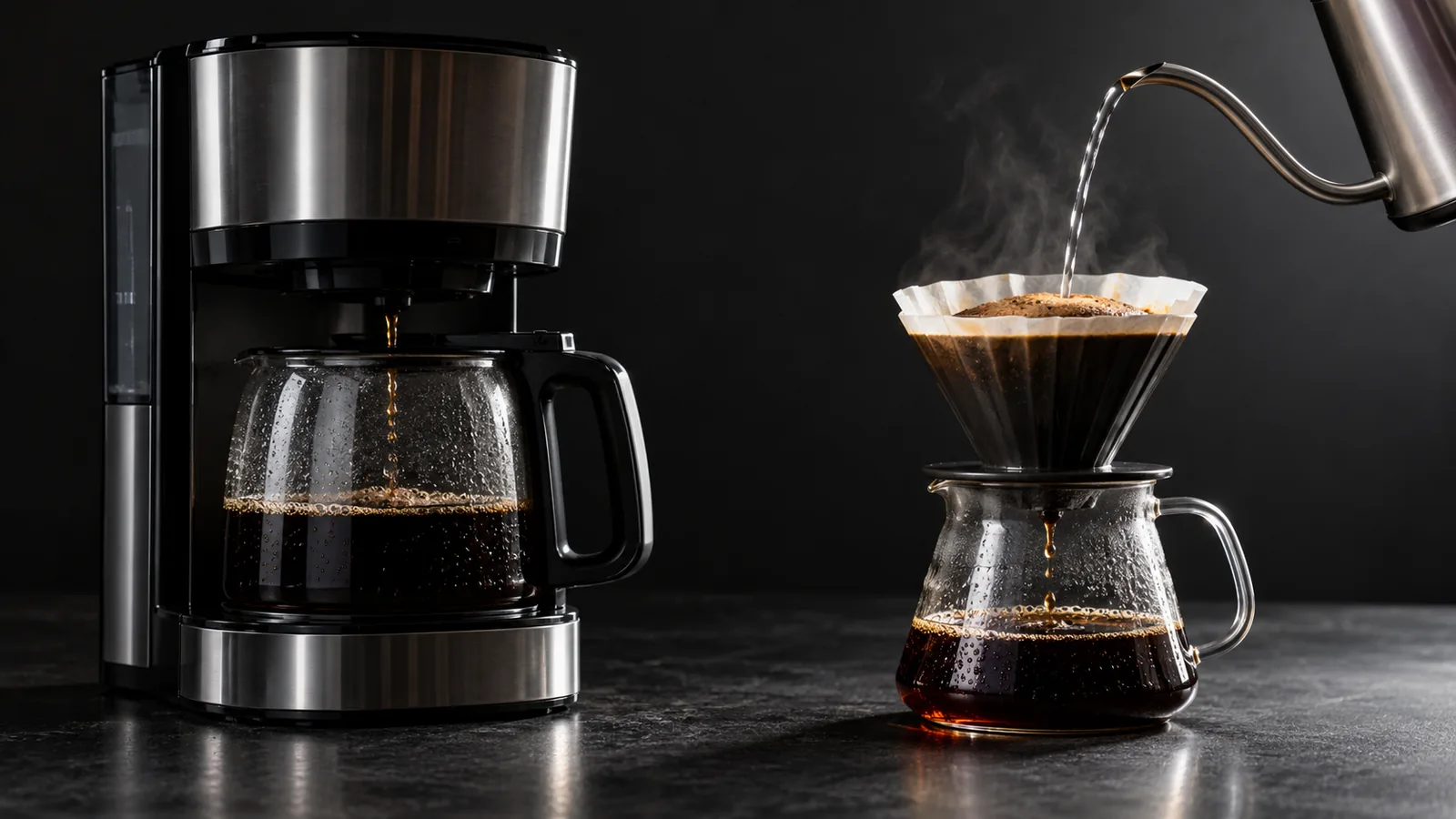
Pour-over and drip coffee extract the same chemical compounds from ground coffee using hot water. The difference is in the control and precision of that extraction.
Where pour-over has an edge:
- The brewer adjusts water pour rate, angle, and distribution in real time based on how the grounds are responding
- Bloom time can be extended or shortened based on bean freshness
- Water temperature can be verified precisely and adjusted mid-brew
- Multiple pours allow assessment of extraction rate and adjustment
Where drip machines match or exceed pour-over:
- SCA-certified machines hit the same 195–205°F target that manual pour-over targets
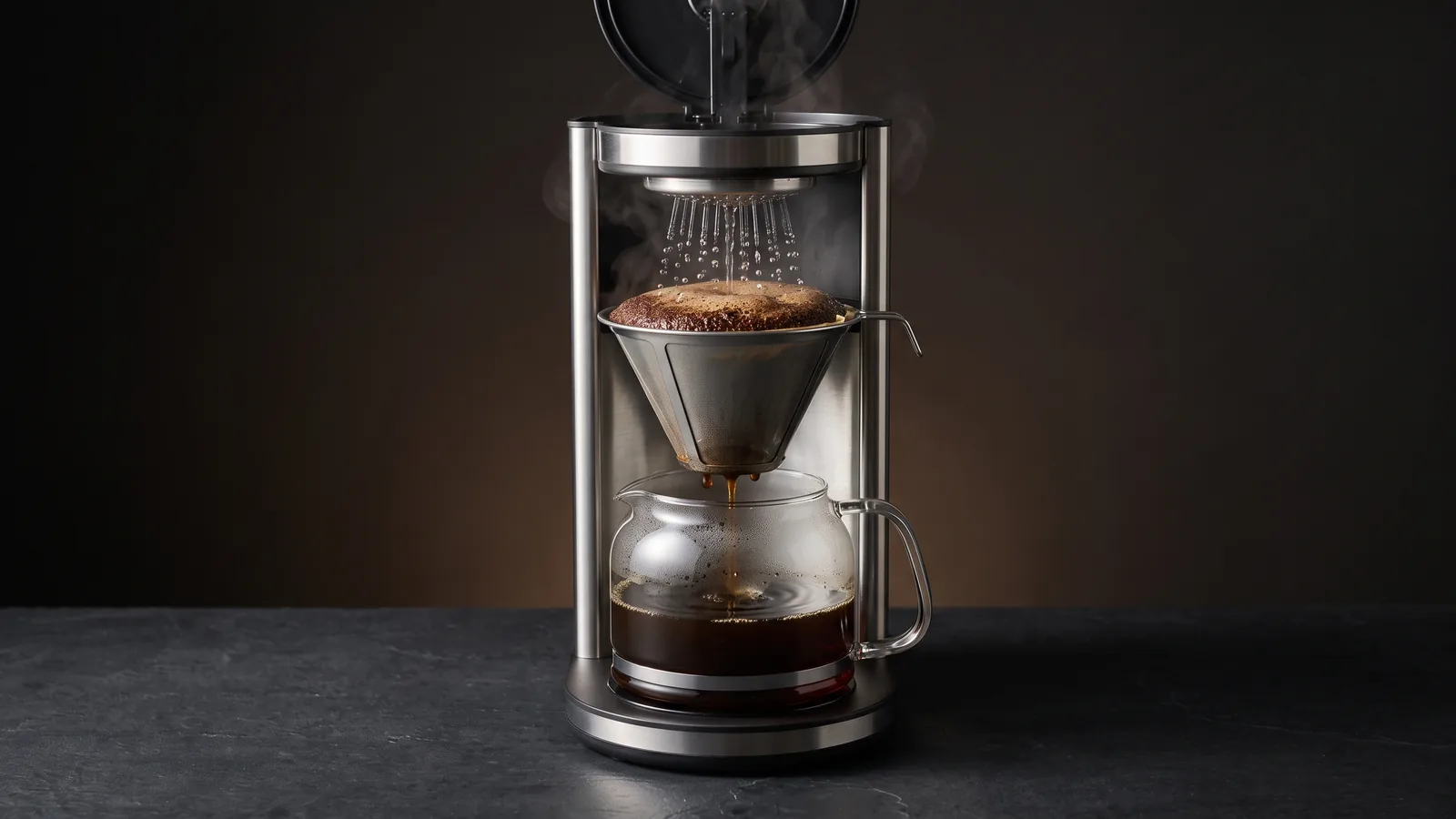
- Bloom cycles in drip machines replicate the pre-infusion step of manual pour-over
- Wide, multi-hole showerheads in quality drip machines distribute water more evenly than many manual pourers achieve
- Consistency: a drip machine produces identical results every time; pour-over results vary with the brewer’s consistency
The honest summary: in a skilled brewer’s hands with fresh beans, pour-over produces a more nuanced, optimized cup. In the hands of an average user with the same beans, a well-designed drip machine produces equal or better results because human consistency is the variable that matters most. A distracted pour-over is worse than a well-functioning drip machine.
Time and effort
| Factor | Drip coffee maker | Pour-over |
|---|---|---|
| Active time | 30–60 seconds (setup, press start) | 4–6 minutes (continuous) |
| Passive brewing time | 5–8 minutes (unattended) | 0 (you are the machine) |
| Minimum equipment | Machine + ground coffee + water | Brewer + kettle + grinder + scale + filters |
| Skill required | Minimal (correct ratio, fresh water) | Moderate (pour control, timing, grind adjustment) |
| Consistency | Machine-consistent | Varies with brewer |
| Capacity | 4–14 cups easily | 1–3 cups typical; 6-cup Chemex feasible |
Pour-over is a practice. Many buyers who describe themselves as coffee enthusiasts choose pour-over precisely because the involvement is part of the value — the ritual of making coffee carefully is worth the time. For buyers who want good coffee as an outcome without it being a morning activity, a drip machine is the better fit.
Equipment cost comparison
Pour-over setup
| Item | Budget | Mid-range | Premium |
|---|---|---|---|
| Pour-over brewer (V60, Chemex, Kalita) | $10–$20 | $25–$50 | $50–$80 |
| Gooseneck kettle | $25 (basic) | $50–$80 | $150–$200 (Fellow Stagg) |
| Burr grinder | $35 (entry) | $80–$150 | $200–$400 |
| Scale | $10 | $25–$40 | $80+ |
| Filters | $5–$10/100 | — | — |
| Total | $85–$100 | $180–$320 | $480–$680+ |
Drip machine setup
| Item | Budget | Mid-range | Premium |
|---|---|---|---|
| Drip machine | $30–$50 | $80–$130 (SCA-certified) | $250–$350 (Technivorm) |
| Burr grinder (optional; enhances any brewing method) | $35–$150 | — | — |
| Total (machine only) | $30–$50 | $80–$130 | $250–$350 |
A capable drip machine costs significantly less than a full pour-over setup that includes a quality gooseneck kettle and grinder. The comparison often made between “a $15 plastic drip machine vs a $30 V60” is incomplete — the V60 requires an $80 kettle and a $100 grinder to perform well.
Where buyer satisfaction actually splits
Looking at verified buyer patterns, four distinct groups emerge:
Group 1 — Pour-over converts: buyers who describe switching from drip to pour-over as transformative. Common attributes: already buying specialty coffee beans, interested in brewing as a practice, willing to spend 5–10 minutes actively making coffee every morning. These buyers are unlikely to switch back regardless of drip machine quality.
Group 2 — Drip machine converts (from pour-over): buyers who describe starting with pour-over and switching back to drip for convenience. Common patterns: early parenthood, changed work schedules, desire for more consistent results without daily attention to technique. These buyers often keep a V60 for weekends and use drip daily.
Group 3 — Drip-only satisfied: buyers who tried pour-over and found the improvement not worth the effort. Common with buyers who use milk, flavoring, or darker roasts where extraction nuance is less detectable.
Group 4 — Hybrid users: own both; use drip for daily routine and pour-over for occasions or specific beans. A common setup in households with one enthusiast and one non-enthusiast partner.
The right decision by use case
| Use case | Better choice |
|---|---|
| Single cup in the morning before leaving | Pour-over or single-cup drip (4-cup machine) |
| Coffee for 4+ people simultaneously | Drip machine (pour-over doesn’t scale conveniently) |
| Light roast, single origin, maximum flavor | Pour-over if skilled; SCA drip machine if not |
| Dark roast, milk or flavoring | Either; drip machine sufficient |
| Delay-brew (coffee ready when you wake up) | Drip machine with programmable timer |
| Weekend ritual, coffee as a practice | Pour-over |
| Camping, travel | Pour-over (lighter, more portable) |
| Office or shared household | Drip machine |
The practical recommendation
The question “which is better” has no single answer — but the question “which is better for me” does.
Buy a drip machine if: you want consistent, good coffee with minimal daily effort; you brew for multiple people; you want programmability; or you have tried pour-over and found the results not meaningfully different given the effort.
Set up a pour-over if: you already buy fresh specialty beans; you find the practice of making coffee carefully enjoyable; you can commit 5–10 focused minutes per morning; or you have tried drip machines and are consistently disappointed by the results.
If you are uncertain, start with a drip machine at the $80–$130 SCA-certified tier. The barrier to entry is lower, the consistency is guaranteed, and switching to pour-over later is straightforward if you find yourself wanting more control.
SCA certified drip coffee makers explained · How to choose a drip coffee maker · The best drip coffee makers